Get rewarded with our new loyalty program JOIN NOW
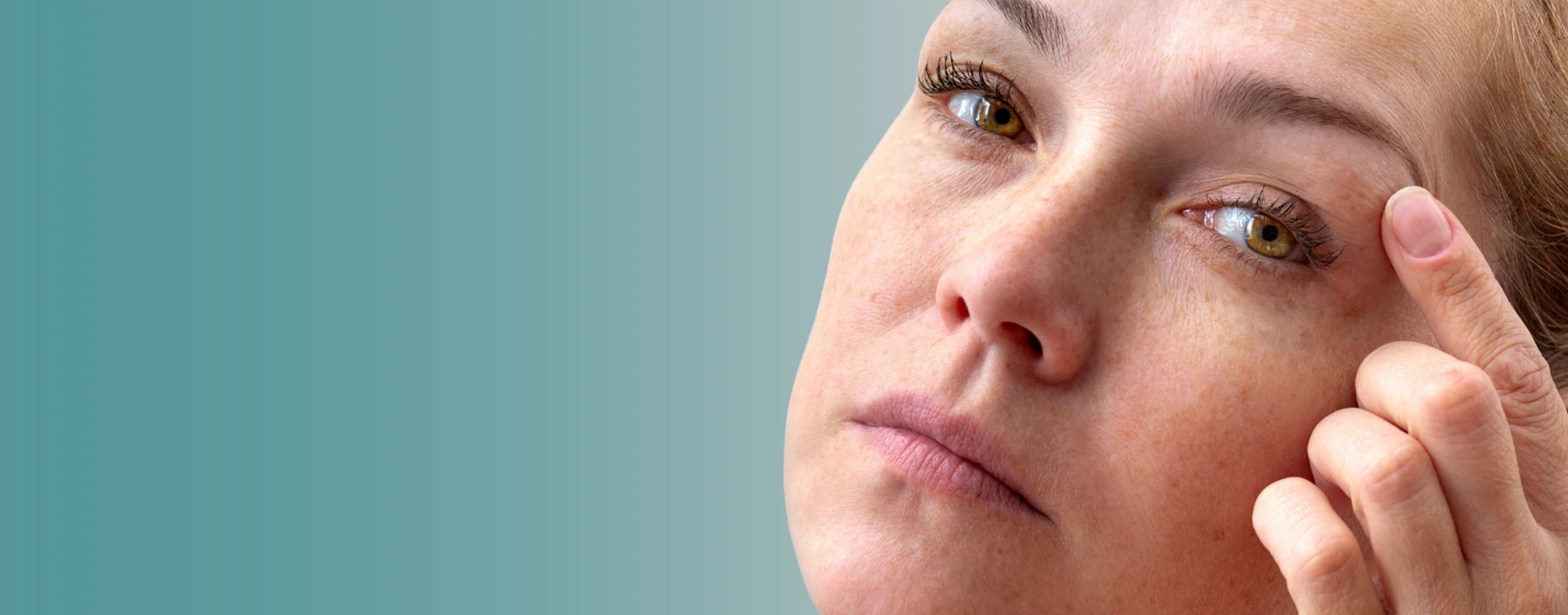
Sagging Brows Overview
Sagging brows, sometimes called brow ptosis, refer to the downward descent of the eyebrow and the skin above it, the result of skin elasticity loss, weakened forehead muscles, and volume changes deep in the tissue. Over time, this produces a heavier upper eyelid, a permanently tired or serious resting expression, and in some cases, a mild reduction in upper peripheral vision that patients don’t always connect to the brow itself.
A sagging brow is one of the more common reasons patients across Montgomery and Bucks County book a consultation, since it changes how the whole face reads, not just one feature. Springhouse treats sagging eyebrows without surgery using ultrasound-based skin tightening, targeted Botox, and non-surgical thread lifting, each chosen and sequenced based on the patient’s degree of laxity, skin quality, and desired outcome.

What Is Eyebrow Sagging, Exactly?
Eyebrow sagging is a structural change, not just a cosmetic one. As the forehead loses collagen and support layers thin, the brow gradually slides lower on the bony orbit, crowding the eyelid, altering the upper third of the face, and in some patients, narrowing the outer visual field. Many describe it simply as looking perpetually tired, annoyed, or older than they feel, even on days they’re fully rested.
At Springhouse Dermatology, various treatment options are available that offer; a physiologic change with real, measurable causes, not a look to mask. Dr. Weishar and Dr. Clark build every plan around an in-person evaluation of brow position, skin quality, and muscle behavior, following a physician-led protocol rather than a one-size-fits-all treatment.
Signs & Symptoms of Sagging Brows
Sagging brows rarely appear as one isolated change, they typically show up as a combination of visible shifts in brow position, skin texture, and expression, ranging from barely noticeable to unmistakable depending on how far the laxity has progressed.
Common Signs
- A lowered or flattened brow position, especially at the outer corners, often the earliest change patients notice
- Thinner, crepier-looking skin texture across the brow bone as collagen support declines
- Excess skin bunching just above the eyelid, sometimes described as “hooding”
- A heavier, more downturned appearance to the eyes, with deepening horizontal forehead lines from compensatory muscle strain
- In more advanced cases, a pronounced droopy brow that begins to encroach on the upper visual field
Most patients arrive already aware that something has shifted, even if they can’t quite name it. The signs tend to build slowly, then become impossible to ignore.
How It Impacts Daily Life
Beyond appearance, a drooping brow changes how makeup sits, how glasses fit, and how photographs read, many patients say they look “annoyed” or “exhausted” in pictures regardless of how they actually feel. For some, the emotional toll is more pronounced than the physical one; a face that no longer reflects how youthful or alert they are inside. In more significant cases, patients report genuine vision impairment due to drooping brows, particularly in the outer visual field, which can affect reading, driving at night, or general day-to-day ease.
Ready to book or just have a question? Our team is here to help!

What Causes Sagging Brows?
Understanding sagging eyebrow causes helps set realistic expectations for treatment, and explains why the condition tends to accelerate rather than plateau.
Biological Factors
Collagen and elastin production decline steadily after the mid-30s, and the forehead is one of the first areas to show it. As the skin’s structural scaffolding weakens, it can no longer hold the brow in its original position against gravity. Volume loss in the temple and upper cheek compounds the effect, removing the underlying support that once kept the brow lifted.
Environmental & Lifestyle Triggers
Sun exposure without necessary protection for prolonged periods breaks down collagen faster than time alone would, which is one reason brow drooping tends to be more pronounced in patients with a history of significant UV exposure. Genetics play a role in how early and how severely brows descend, and habitual expressions, squinting, frowning, raised brows from repeated forehead engagement, can accelerate skin laxity in the area over time.
Progression Over Time
Sagging brows aren’t static, the same forces causing the change keep acting on the skin over time, which is why waiting rarely makes treatment easier and often makes it more involved.
Left untreated, brow sagging tends to worsen gradually rather than stabilize, since the same collagen loss and gravitational pull that caused the initial change continue year over year. Early intervention, whether through Sofwave™, Botox, or thread lifting, tends to produce more natural, easier-to-maintain results than waiting until the sag is advanced.

The Springhouse Approach to Treating Sagging Brows
No two brows sag the same way, so no two treatment plans at Springhouse look identical. Rather than defaulting to a single modality, Dr. Weishar and Dr. Clark build each plan around the patient in front of them, often layering treatments in a specific sequence, guided by a clinical philosophy that favors gradual, natural-looking correction over a single aggressive fix.
Every treatment plan at Springhouse starts with a physical evaluation of skin laxity, muscle movement, and brow asymmetry, not a package applied regardless of anatomy. The best results often come from combining modalities: Sofwave™ to rebuild collagen, Botox to fine-tune muscle balance, and Silhouette InstaLift where an immediate lift is the goal. Dr. Weishar and Dr. Clark plan sequencing together, so each treatment builds on the last.
Dr. Weishar’s Role
Dr. Weishar brings years of hands-on experience in lasers, energy-based devices, and injectables, with a particular focus on precision dosing and outcomes that read as refreshed rather than “done.” Her approach to brow work centers on subtlety, restoring lift without disturbing the natural architecture of the face.
Dr. Clark’s Role
Dr. Clark has a background that is rooted in evidence-based dermatology and skin biology, which shapes how treatment plans are built and sequenced. Her clinical reasoning focuses on why a given brow is sagging, collagen loss, muscle imbalance, volume depletion, rather than simply treating the symptom.

Treatment Options for Sagging Brows
Because sagging brows can stem from a mix of skin laxity, muscle imbalance, and volume loss, treatment isn’t limited to a single approach. Below are the non-surgical options Springhouse uses to address each of those factors, individually or in combination.
Springhouse offers several non-surgical sagging eyebrows treatment options, often combined for a fuller result.
Laser / Energy-Based Treatments
Sofwave™ uses focused ultrasound to stimulate collagen deep in the mid-dermis, gradually tightening the skin above the brow with no incisions and no downtime.
Injectables
Botox relaxes the specific muscles pulling the brow downward, producing a subtle lift and smoother forehead. Springhouse has become a trusted source for Botox brow lift in Philadelphia-area patients specifically because of the precision needed to avoid an over-arched or “frozen” look, a common risk with less experienced injectors.
Microneedling / RF Treatments
Radiofrequency-based skin tightening can be layered into a brow plan to add further collagen stimulation for patients seeking gradual, cumulative firming.
Chemical Peels / Resurfacing
For patients whose brow concerns overlap with sun damage or textural change, a resurfacing treatment can improve tone and skin quality alongside the lifting protocol.
Skincare / Medical Maintenance
A physician-guided skincare regimen helps maintain collagen density between in-office visits, extending results and slowing further sagging.
Which Treatment Is Right for You?
The right approach depends on several individual factors, the severity of your sagging, your skin type and elasticity, how much downtime you can accommodate, and whether your goal is subtle maintenance or a more visible lift.
Patients with mild laxity and resilient skin often do well with Sofwave™ alone; those with thinner skin or more pronounced drooping may benefit from pairing it with Botox or a thread lift. Because these factors interact differently for every patient, Dr. Weishar and Dr. Clark work through them with you directly, the right combination is something determined during your consultation, not guessed at beforehand.
What Results Can You Expect?
Timelines vary based on treatment: Botox produces a visible change within days, while Sofwave™ and other collagen-stimulating treatments build more gradually, continuing to refine over the following weeks and months as new collagen forms.
Either way, the goal isn’t perfection, it’s a brow that looks naturally lifted and rested, not surprised or overdone. Results are meant to look like you, simply refreshed, with improvement that unfolds gradually over time rather than arriving all at once.

Why Choose Springhouse Dermatology?
At Springhouse Dermatology, we believe brow rejuvenation should look effortless and fit seamlessly into your lifestyle. Our practice combines advanced aesthetic expertise with evidence-based dermatology, giving patients access to non-surgical treatments that deliver refreshed, natural-looking results without the downtime of surgery. Led by Dr. Margo Weishar and Dr. Ashley Clark, our team provides personalized care designed around your facial anatomy, aesthetic goals, and busy schedule.
- Dual Physician Expertise: Benefit from the combined strengths of Dr. Margo Weishar, a nationally recognized laser specialist and Top 3% injector, and Dr. Ashley Clark, a board-certified dermatologist whose research-driven approach ensures every treatment plan is grounded in science and personalized to suite to your skins needs.
- Natural, Non-Surgical Results: We focus on subtle brow enhancement that restores a refreshed, youthful appearance while preserving your natural expressions. Every treatment is customized to complement your facial features rather than change them.
- Convenient, Patient-Focused Care: Serving patients throughout Chestnut Hill, Radnor Township, Mount Airy, Doylestown, and the surrounding communities, our Lower Gwynedd office offers efficient appointments, convenient parking, and a streamlined experience that respects your time without compromising on quality.
Frequently Asked Questions
What causes sagging brows?
Sagging brows are caused primarily by age-related collagen and elastin loss, weakened forehead muscles, and volume depletion in the temple and upper cheek, often accelerated by sun exposure and genetics.
How many sessions are needed to see results?
Botox typically shows results within 3-7 days. Sofwave™ is usually done as a single session with results building over 2-3 months as collagen rebuilds. Silhouette InstaLift produces an immediate lift in one appointment.
Is there any downtime with non-surgical brow lifts?
Botox and Sofwave™ involve essentially no downtime. Silhouette InstaLift may cause mild swelling or tenderness for a few days, but most patients resume normal activity immediately.
Can drooping brows actually affect my vision?
Yes, in more advanced cases, brow drooping can encroach on the upper peripheral visual field, which some patients notice while reading, driving, or in low light.
Are these treatments safe?
All treatments are performed or directly overseen by Dr. Weishar and Dr. Clark, both board-certified, using FDA-approved devices and techniques suited to each patient's anatomy.
How long do results last?
Botox typically lasts 3-4 months, Sofwave™ results can persist for a year or more, and Silhouette InstaLift results generally last 12-18 months, varying by individual skin quality and lifestyle factors.